
Bourbon County Criminal Case Files
Criminal case files in Bourbon County are District Court records once charges are filed in court. The Bourbon County Attorney prosecutes misdemeanor and felony cases, juvenile offender cases, child in need of care cases, care and treatment cases, and asset forfeiture matters in Bourbon County District Court. Sheriff booking data may appear first, but the court record is the source for the filed complaint or information, later amended charges, plea entries, disposition, sentence, and probation events.
Bourbon County is in the Kansas 6th Judicial District with Linn and Miami counties. District Court handles felony criminal cases and many state misdemeanor or traffic-criminal matters. Fort Scott Municipal Court handles city ordinance violations and city traffic matters, so a municipal charge may not follow the same path as a District Court felony or misdemeanor file.
The Kansas conviction and diversion expungement statute is one criminal-record source assigned to this page.
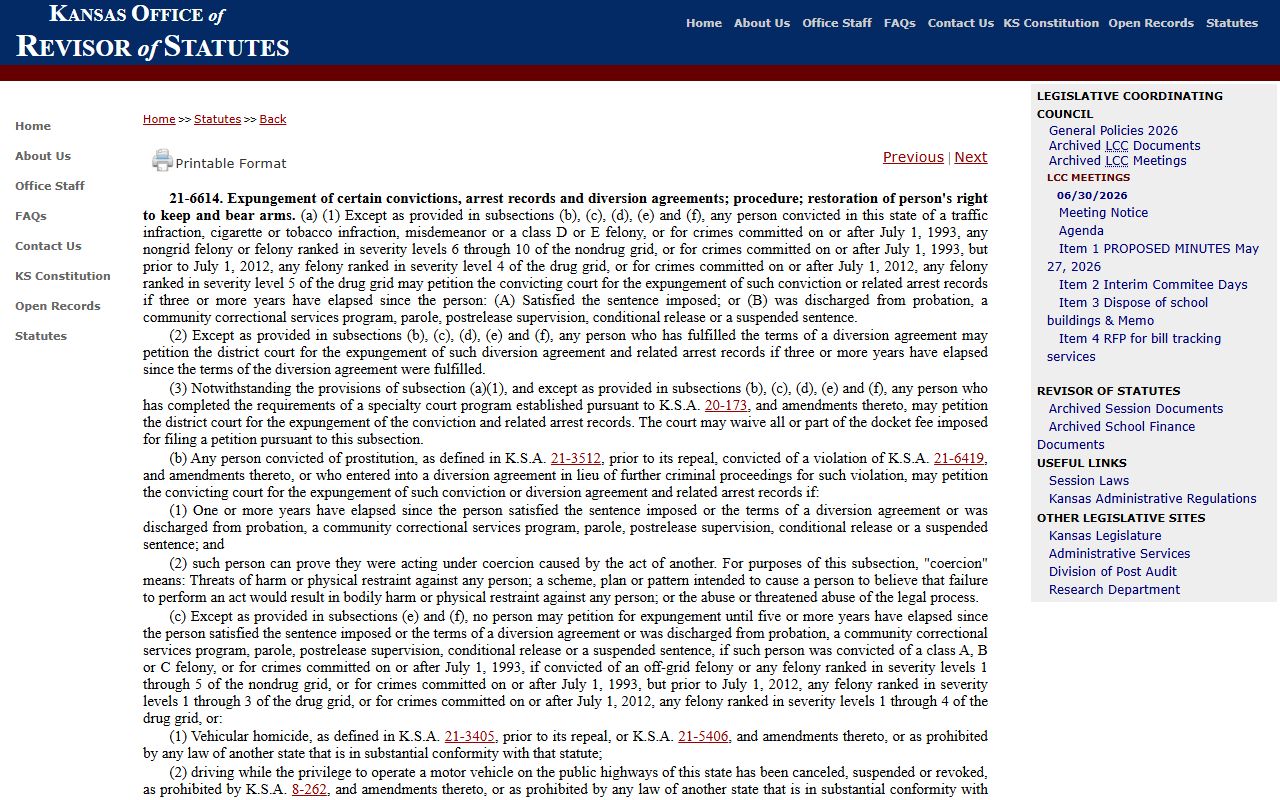
That statute is relevant because a Bourbon County criminal court record may later become limited from public access if expungement is granted.
Search Bourbon County Criminal Records
Use Kansas CaseSearch for public District Court criminal case lookup. Search by defendant name or exact case number when known. Bourbon County examples from official docket snippets use case numbers such as BB-2024-CR-000248, where BB marks Bourbon County, the year follows, CR marks criminal, and the final digits are the sequence.
- Open Kansas CaseSearch.
- Search by defendant name, business name, citation, or case number if the field is available.
- Filter to Bourbon County when the portal offers a county filter.
- Open the case and review charges, hearing events, pleas, disposition, sentencing, and public documents.
- Call the Clerk of the District Court at 620-223-0780 for certified copies, older files, missing images, or restricted access questions.
CaseSearch does not replace the jail roster. Booking charges and bond information may change after court appearances. For custody details, use the sheriff roster; for the full criminal case file, use District Court records.
Bourbon County Criminal Case Flow
A criminal record changes as the case moves. Early entries may show a complaint, bond order, first appearance, or arraignment. Later entries can show motions, plea agreements, trial settings, verdicts, dismissal, sentencing, restitution, probation, or violation hearings. A docket line is a short event entry; the full file may contain the underlying order or pleading.
Case flow: Arrest or citation › charges filed › first appearance or arraignment › pretrial motions › plea or trial › disposition › sentencing › probation or post-judgment events.
| Stage | What the Record May Show |
|---|---|
| Charges Filed | Complaint, information, count numbers, statute references, severity, and case number. |
| Arraignment | Charges read, counsel status, plea entry, and next hearing date. |
| Pretrial | Motions, discovery activity, bond review, continuances, and status conferences. |
| Plea or Trial | Guilty, not guilty, no contest, dismissal, trial result, or amended charge outcome. |
| Sentencing | Sentence, jail or prison term, probation, fines, costs, restitution, and conditions. |
What Bourbon Criminal Records Show
A Bourbon County criminal court record should be read field by field. The filing date and case number identify the court case. Charge text shows allegations, not proof of guilt. Disposition and sentencing entries show the legal outcome. A probation-violation status event means the court is reviewing alleged noncompliance after sentencing or diversion.
| Field | Meaning |
|---|---|
| Case Number | Bourbon County criminal identifier, often BB-year-CR-sequence. |
| Defendant | The person charged in the criminal case. |
| Prosecutor | State of Kansas Attorney's Office, Bourbon County, or related prosecutor listing. |
| Charges | Specific alleged offenses filed by the prosecutor, which may be amended or dismissed. |
| Plea | Guilty, not guilty, no contest, or another plea event. |
| Disposition | Current or final result of each charge or the case. |
| Sentence | Jail, prison, probation, fines, costs, restitution, or other ordered terms. |
The arrest-record expungement statute is another source tied to criminal record restrictions.
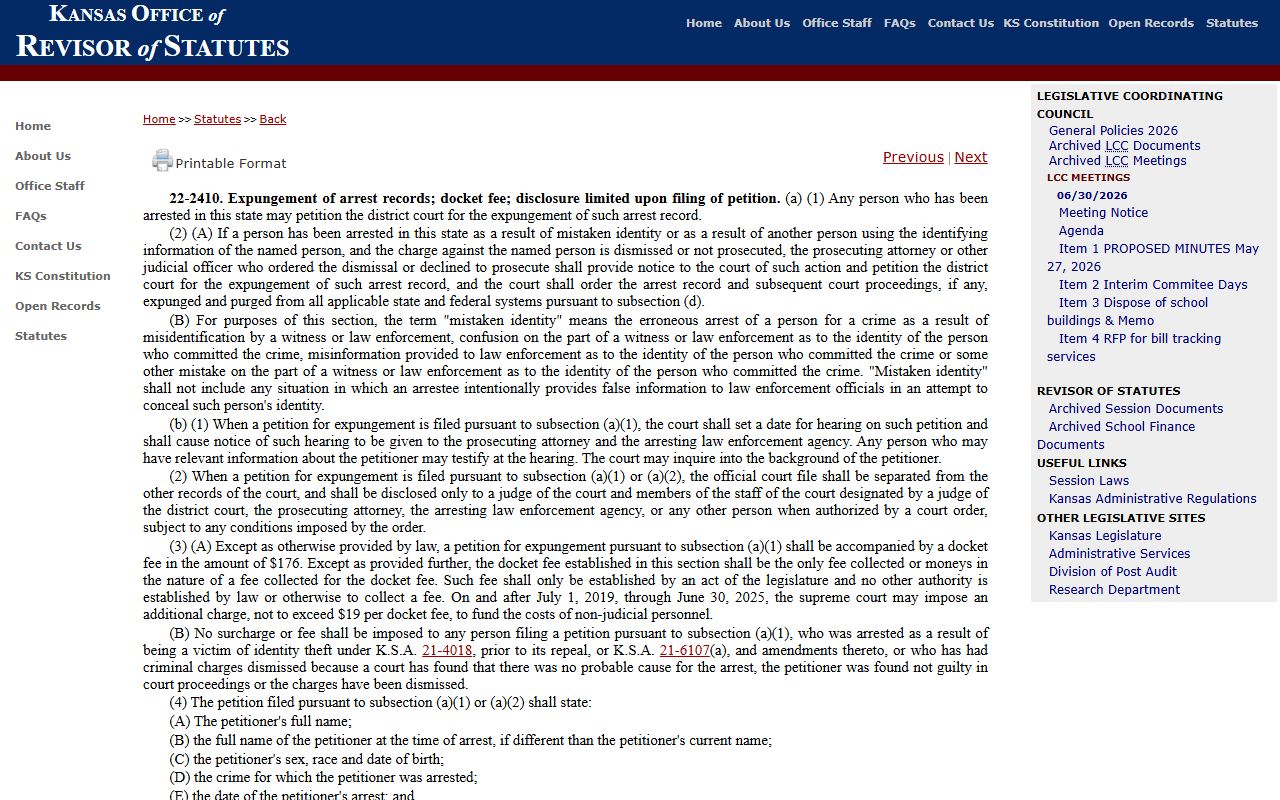
Arrest expungement matters when a booking or arrest did not lead to the same public record outcome as a conviction.
Charges vs Convictions
A charge is an allegation filed by the prosecutor. A conviction is an outcome after a guilty plea, no-contest plea accepted by the court, or guilty verdict. Bourbon County criminal court records can contain charges that were amended, reduced, dismissed, or resolved without conviction, so the disposition field must be read before treating a charge as a final result.
| Point | Charge | Conviction |
|---|---|---|
| Meaning | An alleged offense filed in court. | A final finding or accepted plea of guilt. |
| Where Seen | Complaint, information, docket, roster charge text. | Disposition, journal entry, sentencing order. |
| Can Change | May be amended, reduced, added, or dismissed. | May later be appealed, set aside, or expunged if eligible. |
Sealed and Expunged Records
Juvenile offender records are restricted under K.S.A. 38-2311. Sealed, expunged, mental health, care and treatment, and some protected personal information will not appear as ordinary public criminal court records. Kansas Supreme Court Rule 22 also limits what documents may be viewed remotely.
| Point | Sealed | Expunged |
|---|---|---|
| How It Happens | By statute or court order closing access. | By petition and court order if Kansas eligibility rules are met. |
| Public Search | Usually hidden or limited. | Generally restricted from ordinary public display after order entry. |
| Still Available To | Certain parties or agencies if law allows. | Courts, law enforcement, or licensing contexts in limited situations. |
The municipal-court expungement source applies when a Fort Scott municipal conviction is involved.
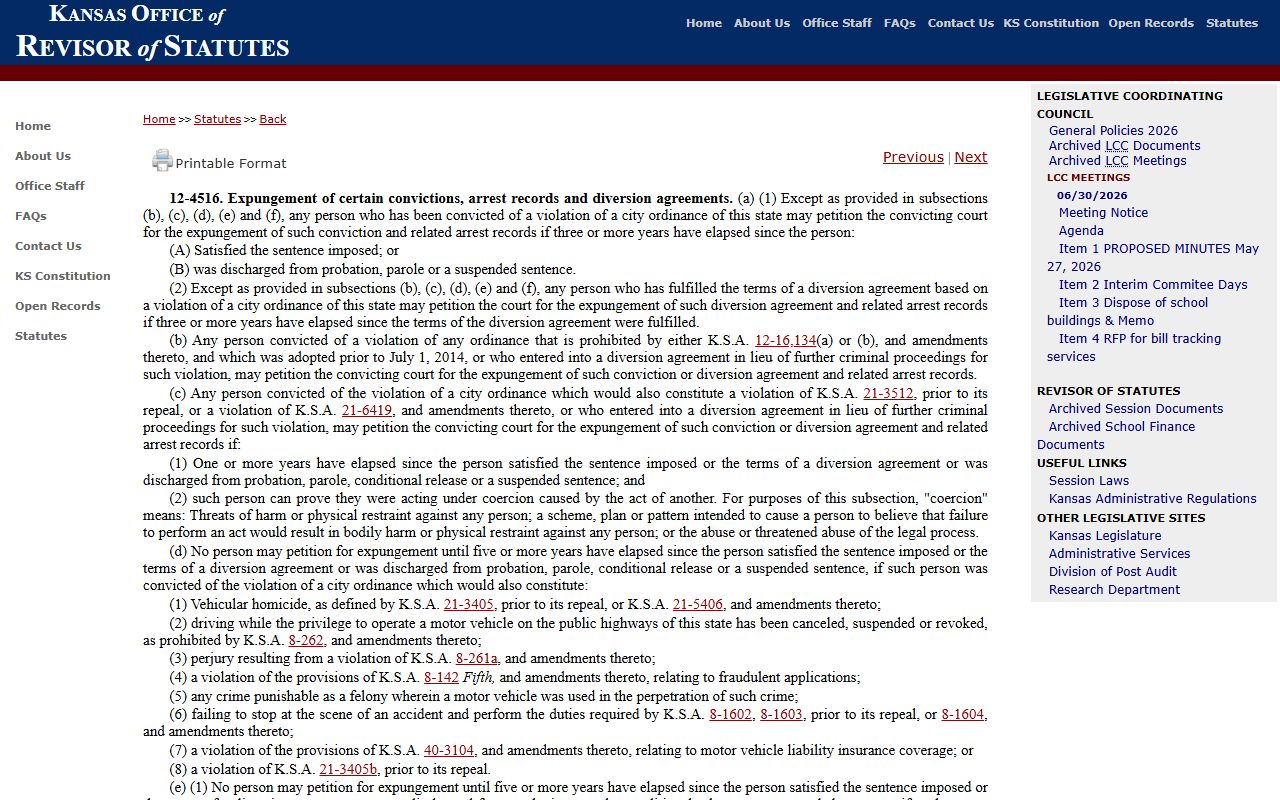
Municipal expungement is separate from District Court expungement, which is why the issuing court must be identified first.
The juvenile offender confidentiality source is also assigned to this page.
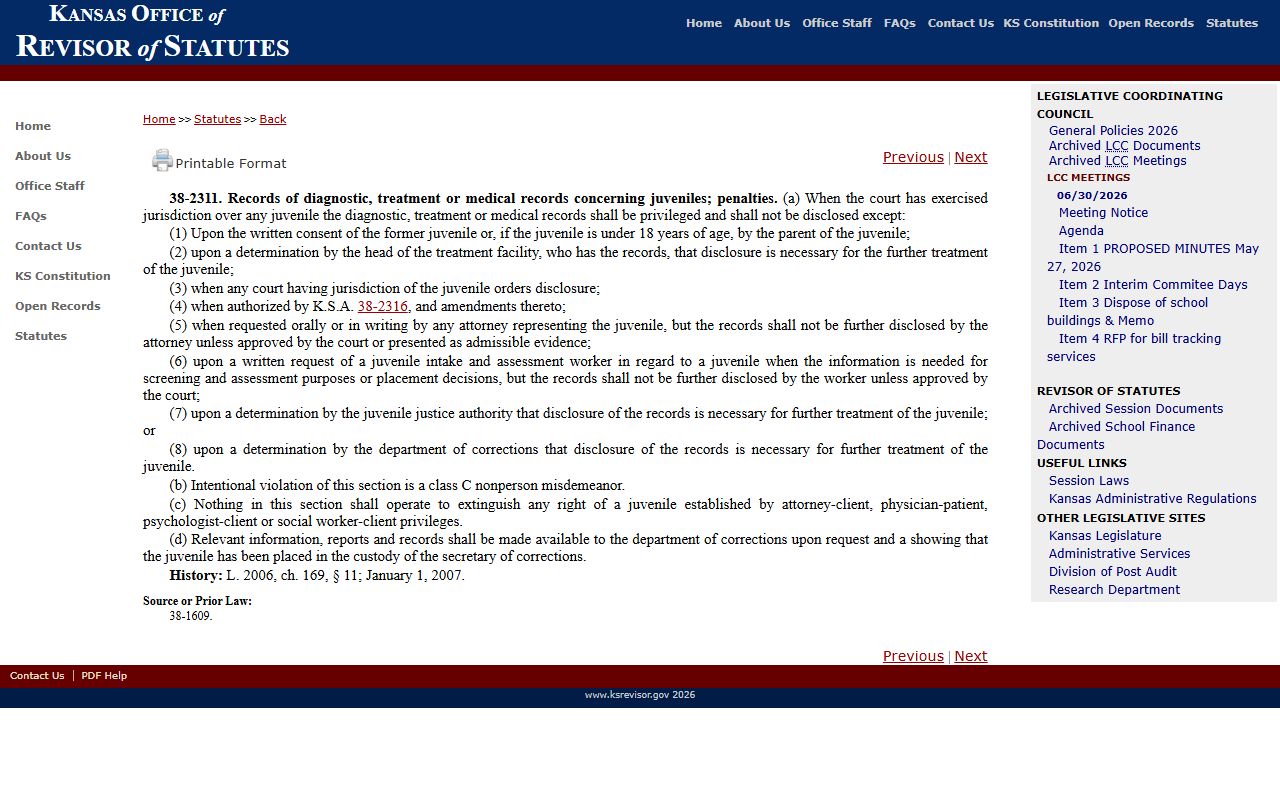
Juvenile confidentiality explains why a public search may not show records that still exist in the court system.
Bourbon Criminal Access Channels
A complete Bourbon County criminal record search may require more than one official source. Kansas CaseSearch is the online court-case route. The courthouse terminal is the fallback when a public file is not remotely available. The Clerk of the District Court handles certified copies, older files, and missing document questions. The jail verifies current custody, bond, booking charge text, and case numbers for people who are booked. Fort Scott Municipal Court handles city ordinance and municipal traffic charges, including municipal warrants that can later appear on the jail roster.
The Bourbon County Attorney's Office is important because it decides and prosecutes charges after law enforcement action. Official research lists the County Attorney office at 210 S. National Ave., Fort Scott, phone 620-223-2910, with Monday through Friday office hours of 8:30 a.m. to 4:30 p.m. That office is not the public case-file clerk, but it explains why a jail booking charge can differ from the formal charge record. If a case has no public court filing yet, the correct public source may still be the sheriff roster or jail phone line rather than CaseSearch.
Federal criminal cases are separate from Bourbon County criminal court records. A federal prosecution involving a Bourbon County resident would use the U.S. District Court for the District of Kansas and PACER, not Kansas CaseSearch. Bankruptcy and federal civil cases also use federal court systems. Keeping those sources separate prevents a false no-record result when the case belongs to another court level.
Criminal record updates can also lag by event type. A plea may appear before the sentencing order image is available. A probation violation may create a new docket event under the old criminal case number. A warrant return may show service of a warrant without showing the reason for the original warrant in the same row. When a record is used for legal, licensing, housing, or employment-related decisions, the page result should be checked against the originating court and FCRA restrictions.
Public users should also separate criminal-history summaries from court files. A statewide or correctional record may show custody or conviction context, while the District Court file shows pleadings, docket events, orders, and sentence details. For Bourbon County, the official case file remains with District Court even when another state agency later receives conviction or custody data.
CaseSearch is also not a guarantee that every public document image is available remotely. Some records can be inspected at the courthouse terminal, some must be requested from the clerk, and some are withheld because Kansas law or Rule 22 limits public display. A careful criminal record search records the source used, the date searched, and whether the result came from a docket entry, a document image, the jail roster, or a clerk response. That source note matters when a charge, disposition, or sentence is later updated, corrected, sealed, or expunged by court order, or moved into a post-judgment status such as probation review or warrant recall. The court docket should be checked again before relying on any older saved result or background summary. If a disposition is missing, the clerk or courthouse terminal is the better verification path.